IWhat Dubai Islands is
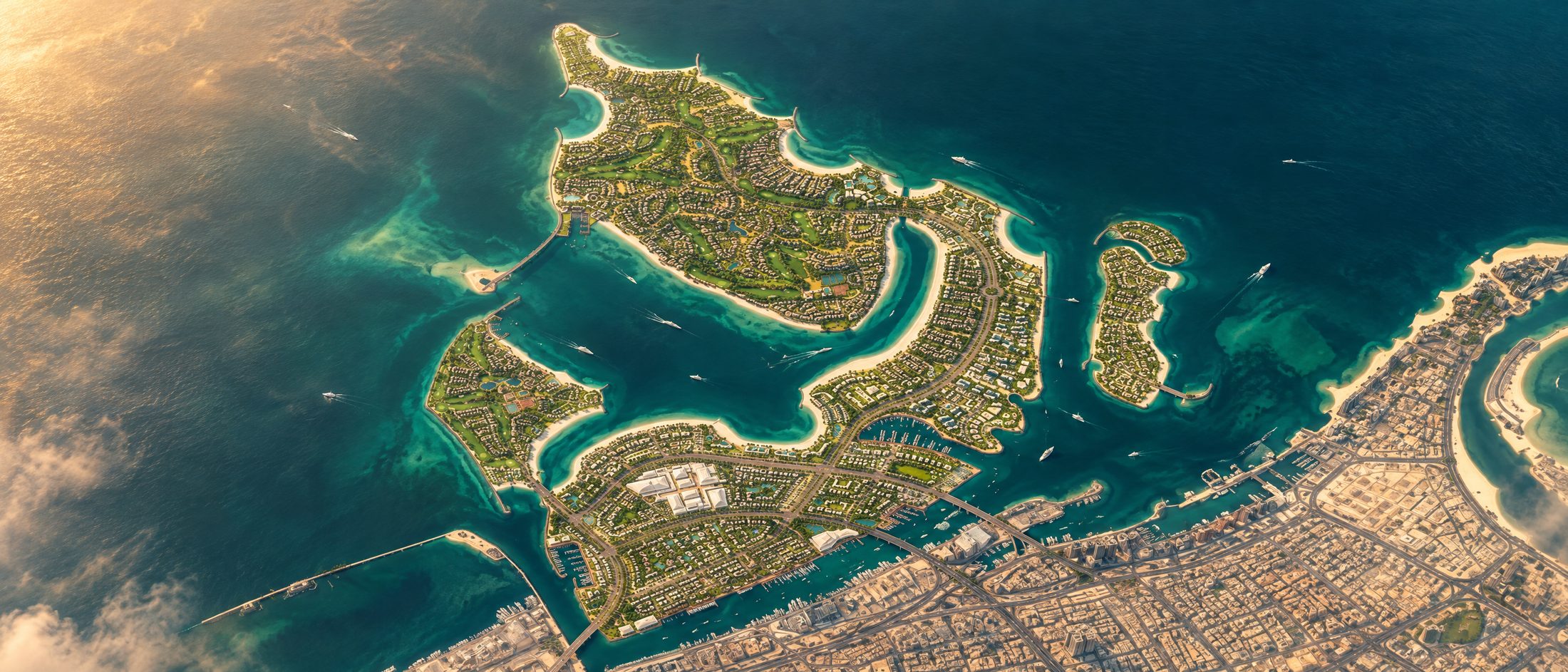
Dubai Islands is a waterfront master community of five reclaimed islands off Dubai’s northern coast, at the mouth of Dubai Creek. The Dubai Media Office gave its latest dimensions in April 2026: 18.6 sq km of land, about 57 km of coastline and 21 km of beachfront, within 10 km of Dubai International Airport and 15 km of Downtown.
The plan has grown as it has been built. The master developer’s Stage 2 vision plan set out 86 resorts and hotels, nine marinas, an 18-hole and a 9-hole golf course and 38,479 homes. Its October 2026 figures give more than 11,000 hotel keys, more than 4,000 branded residences, eight marinas, two 18-hole golf courses and about 62,000 homes for more than 230,000 residents. In April 2026 the official figure was 49,000 homes.
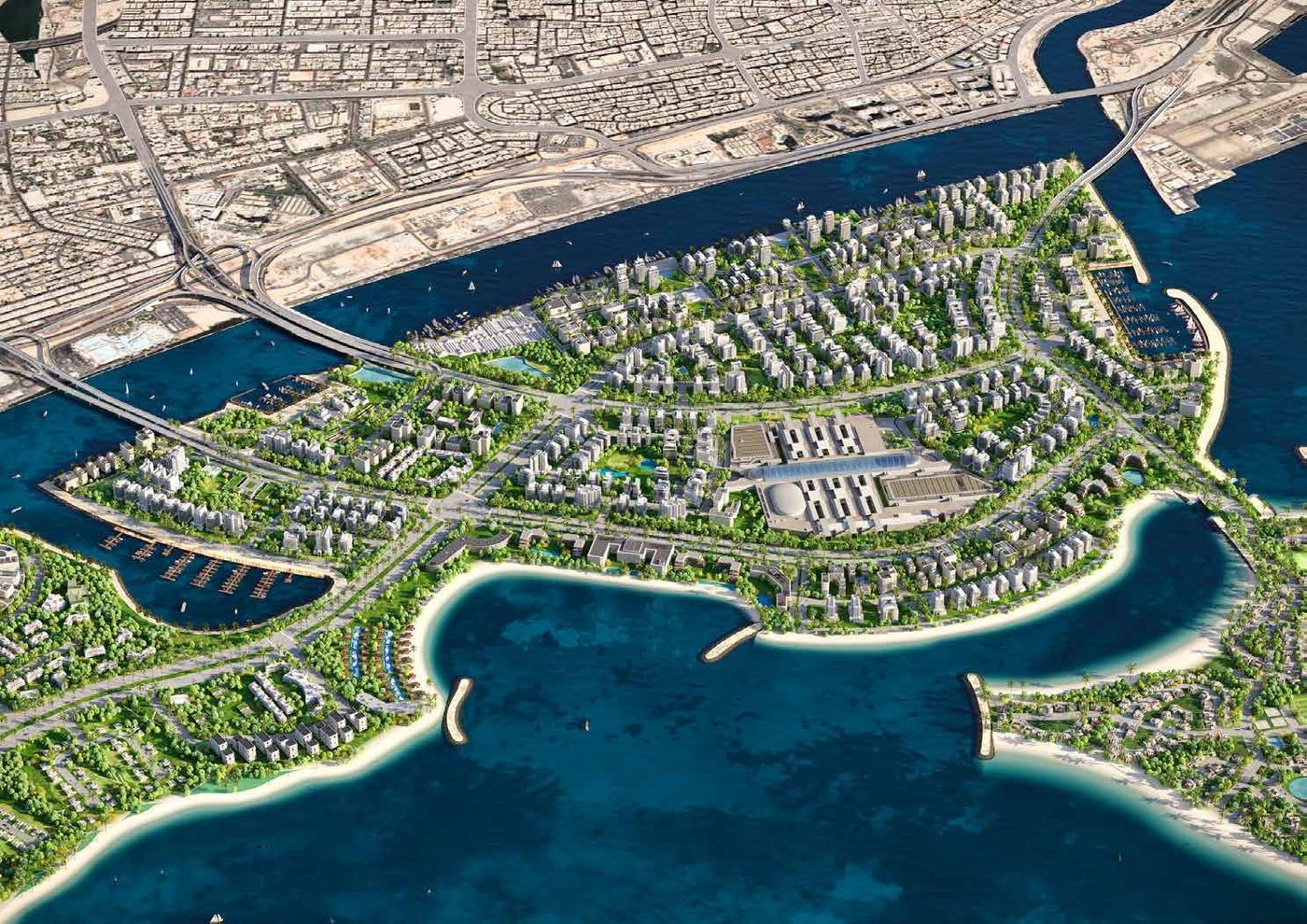
Plainly: this is a new district on government-backed land, close to the airport and the old city, with its plan set out in public. It is not yet a place where many people live.
IIFive islands, five characters
Dubai Islands is often discussed as one place. The vision plan gives each island a different role, and the island a home sits on shapes what it is likely to be worth.
- Island A, the mixed-use core (510 hectares). The busiest island: retail, entertainment, marinas, beachfront hotels and most of the apartments.
- Island B, resorts and communities (323 hectares). Beachfront resorts and low-density villas along the western channel, waterfront hotels and mid-density apartments along the eastern side. Much of the 2024 to 2026 launch activity sits here, including Siora, The Meriva Collection, Bay Villas and Bay Grove Residences.
- Island C, the oasis island (778 hectares, the largest). A golf course, a family resort, wellness and eco resorts, and a marina village, around a landscaped central park.
- Island D, the sports and country club island (156 hectares). A sports club, a nine-hole golf course in the vision plan, a boutique marina village and a beachfront resort.
- Island E, the estates island (99 hectares). Signature estate lots, beachfront villas, a private marina and a clubhouse.
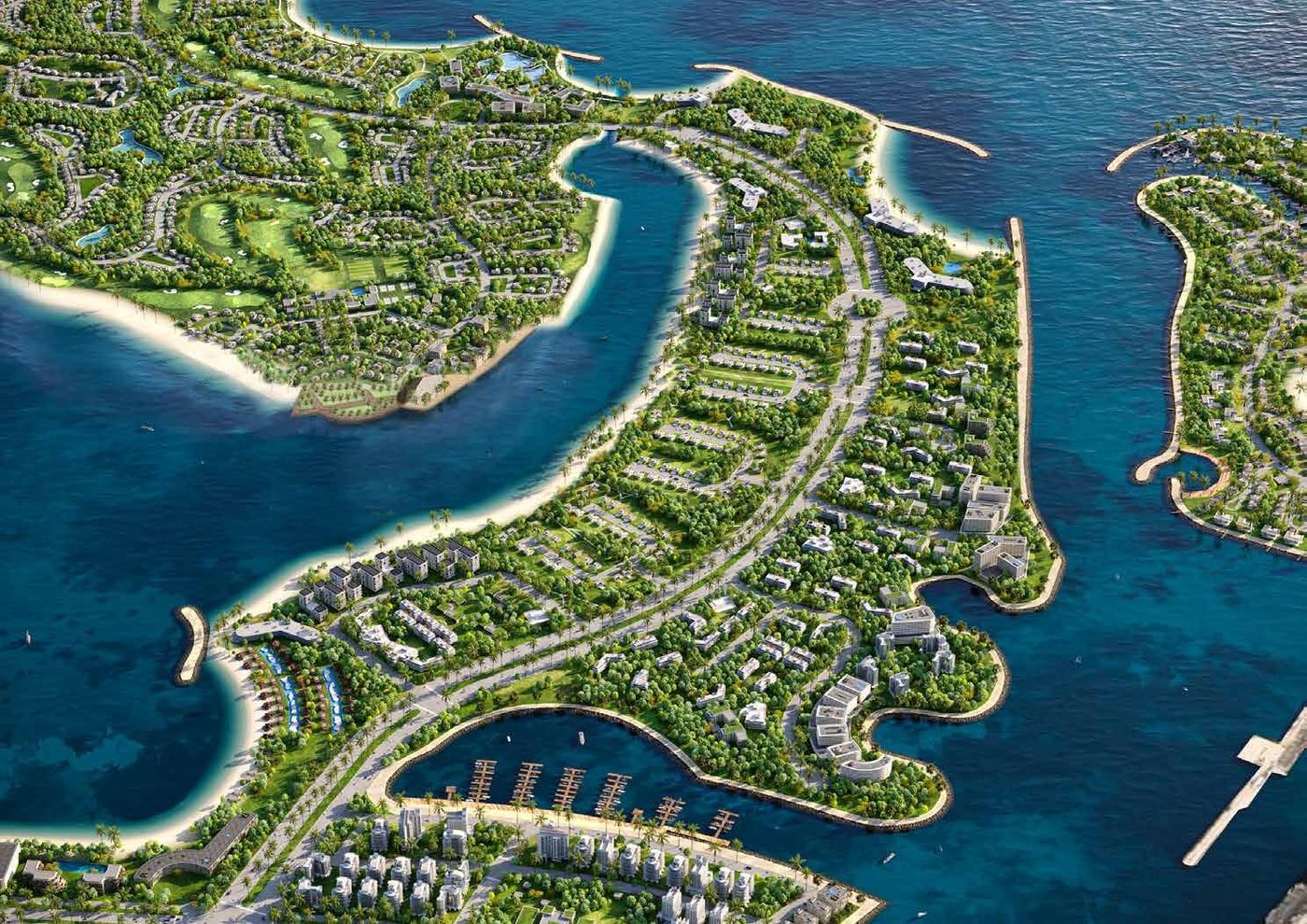
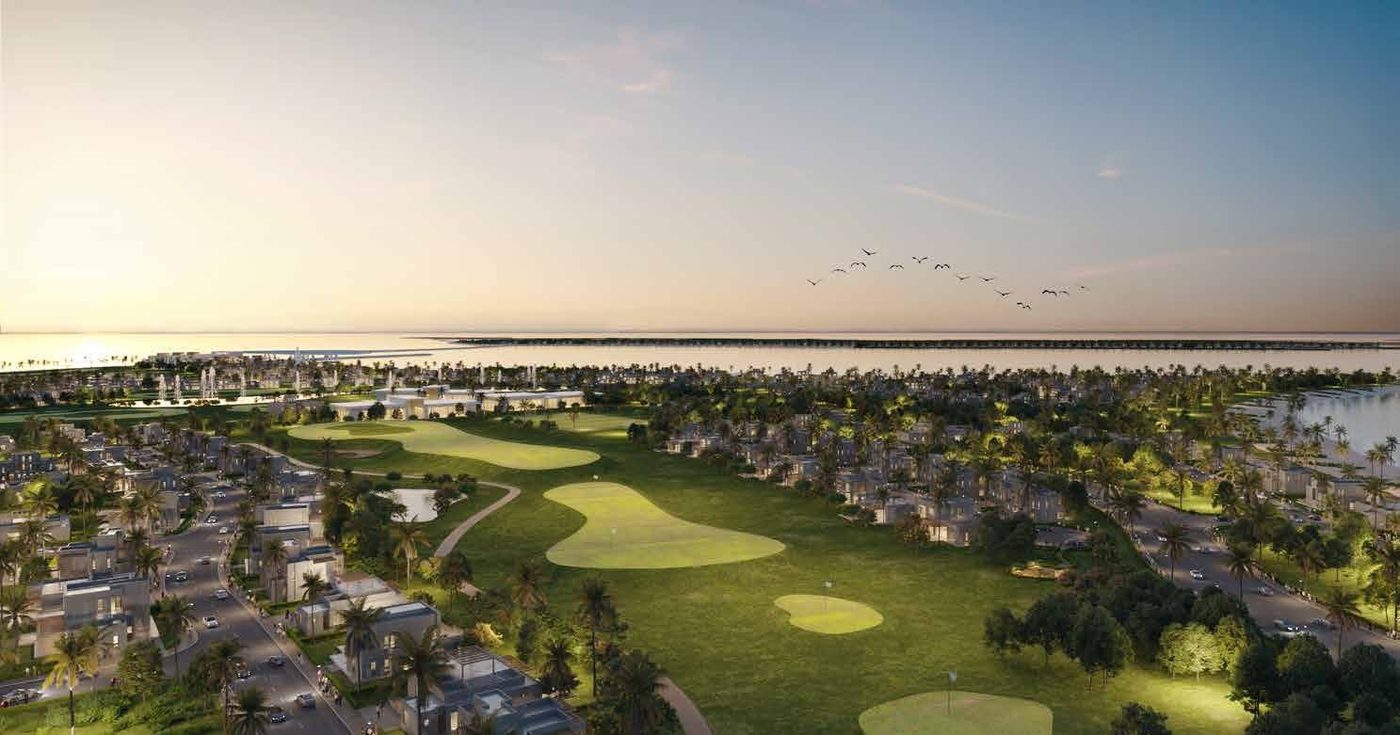
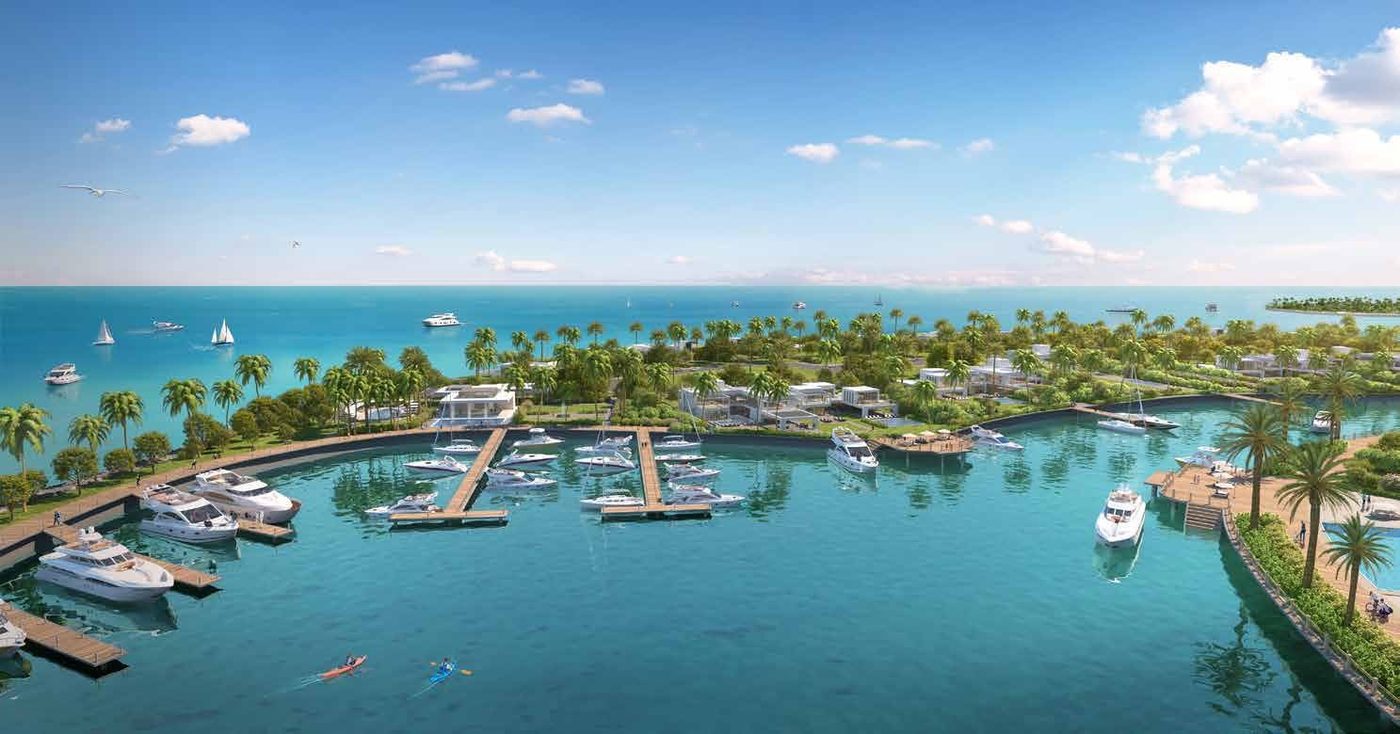
A vision plan is a statement of intent, not a delivery schedule. The master developer has already revised it: the number of homes it now plans is more than half as large again as the vision plan’s figure. Islands A and B are where building is under way. Islands C, D and E are, for now, the plan.
IIIWhy Dubai is building it: the 2040 plan and D33
Dubai Islands is not one of the five urban centres in the Dubai 2040 Urban Master Plan, and no government document we found names it. The master developer describes the project as aligned with the 2040 plan. What matters more is that the island supplies, in one place, much of what Dubai’s two long-term plans ask for.
The 2040 plan sets the supply. Launched in March 2021, it increases land for hotels and tourist activities by 134 percent, raises the length of public beaches by 400 percent, from 21 km to 105 km, doubles green and recreational space, and plans for 5.8 million residents by 2040, up from 3.3 million in 2020 (Dubai Media Office).
D33 sets the demand. The Dubai Economic Agenda, launched in January 2023, aims to double the size of Dubai’s economy within a decade and to make Dubai one of the world’s top three cities, and one of the top three international destinations for tourism and business. It targets AED 650 billion of foreign direct investment over ten years (Dubai Media Office).
The demand is already arriving.
Dubai’s population has already covered about 60 percent of the distance from 2020’s 3.3 million to the 2040 plan’s 5.8 million, in less than a third of the plan’s time. The planned 11,000 hotel keys on Dubai Islands equal about 7 percent of the hotel rooms Dubai had at the end of 2025. People are coming to Dubai faster than the plan assumed, and the island is one of the places built to receive them.
2026 has been a slower year for visitors, with the conflict next door weighing on travel: hotel occupancy was 66 percent in August (Dubai Department of Economy and Tourism, via Gulf News).
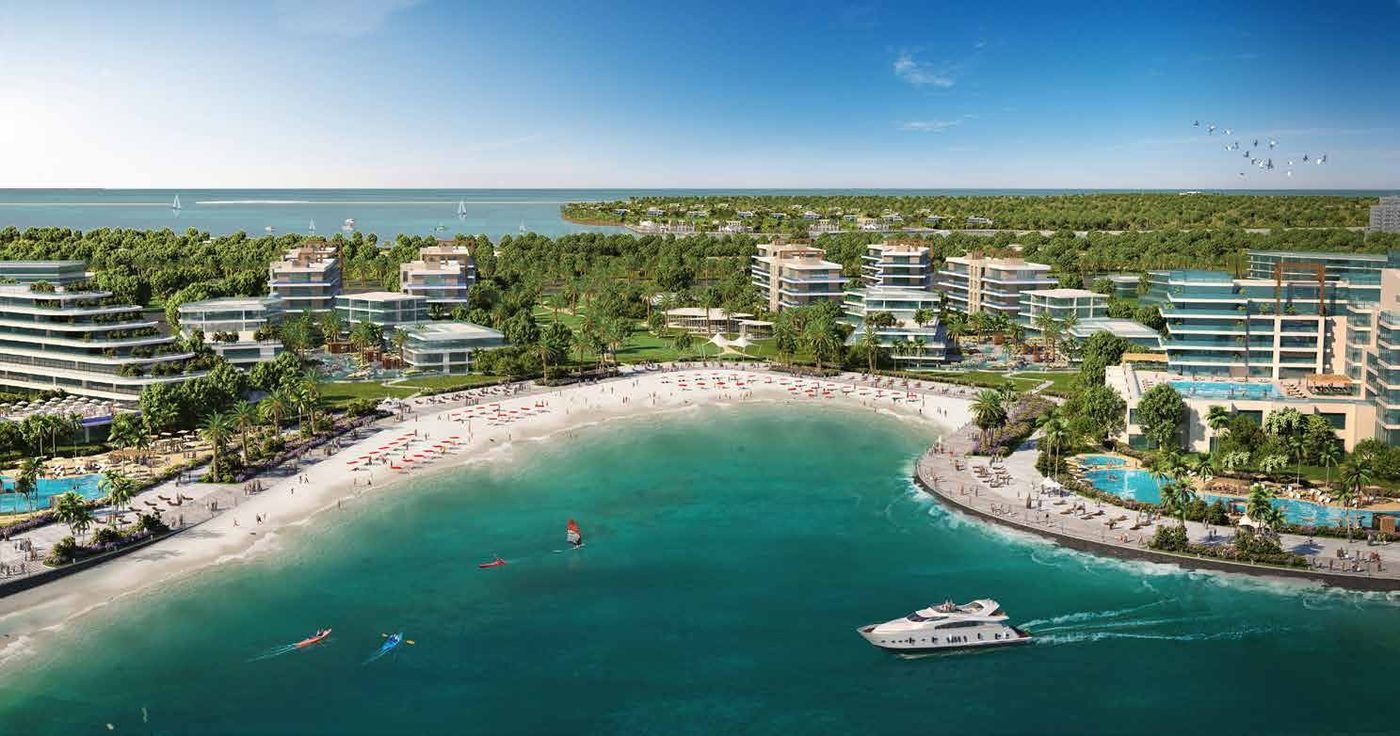
Plainly: the 2040 plan and D33 explain why the government wants more beaches, hotels and homes on this coast. They make the direction of travel clear. They do not set the price of any one home.
IVThe Palm Jumeirah precedent
Palm Jumeirah is the closest precedent Dubai has for Dubai Islands: reclaimed sand, sold off-plan, that became the city’s most recognised address. Construction began in 2001 and sales opened in 2002, the year Dubai first allowed foreign buyers to own freehold property in designated areas, a change made law in 2006. The first homes were handed over in 2006, Atlantis opened in 2008 and the monorail in 2009.
What early buyers made. At launch, a four-bedroom Garden Home sold for AED 2.6 million, a Signature Villa for AED 4.65 million and a one-bedroom Shoreline apartment for AED 600,000, about AED 507 per sq ft (Gulf News, March 2005). In the ten most recent sales to October 2026, Garden Homes changed hands for between AED 23.5 million and AED 56 million, with a median of AED 37.5 million, and Signature Villas for between AED 40 million and AED 145 million, with a median of AED 73.25 million (Property Finder transaction records). Shoreline apartments sold at AED 2,200 to 2,430 per sq ft in September 2026 (Propsearch, from Dubai Land Department sales).
The path was not a straight line. By mid-2007 Palm prices were about three times their launch level (Asteco, via Gulf News). Then the global financial crisis reached Dubai. By February 2009 brokers reported Palm prices down by more than half, and Shoreline apartments fell from over AED 2,300 per sq ft in 2007 to AED 704 by August 2010 (PropertyWire). Garden Home prices fell again, by 38 percent, between 2017 and 2019 (Property Finder, via Gulf Business), before Palm villas rose 146 percent from January 2020 to mid-2023 (Knight Frank).
Entry and holding power decided the outcome. A Shoreline apartment bought at the 2007 peak sells today for about what it cost nineteen years ago. A villa bought at launch has multiplied many times over. Same island, same address: what differed was when the buyer came in, what they bought, and whether they could hold through the falls. These multiples are price only, before purchase fees, service charges and the renovation spend behind many of today’s top villa sales.
| Palm Jumeirah | Dubai Islands | |
|---|---|---|
| Start | Construction 2001, sales 2002 | Current masterplan unveiled 2022 |
| Land | 5.6 sq km | 18.6 sq km |
| First homes handed over | 2006 | March 2026 |
| Residents | About 25,000 today | More than 230,000 planned |
| Hotels | Atlantis opened 2008, two years after the first homes | 86 resorts and hotels in the vision plan; two large hotels open |
| Price today | Villas about AED 8,200 per sq ft, apartments about AED 2,350 (ValuStrat, March 2026) | Median about AED 2,671 per sq ft (dataHabibi) |
What carries across, and what does not.
- The pattern carries across. On the Palm, the largest gains went to early buyers, on the water, who could hold through a full cycle. On Dubai Islands, the beachfront plots and the best aspects are the equivalent, and the island is at the same stage the Palm reached in 2006: first homes handed over, most of the destination still to come.
- The starting price does not. Palm apartments launched at about AED 507 per sq ft. Dubai Islands sells today at a median of about AED 2,671. Today’s buyers are not paying 2002 prices, so the Palm’s multiples should not be read across as a forecast.
- The scale does not. Dubai Islands is more than three times the Palm’s land area and plans for about nine times its population. It is a district rather than a single landmark, and more homes will compete for the same buyers.
Plainly: the Palm shows what a reclaimed island can become once its plan is delivered, and who captured the gain. Dubai Islands offers the same kind of opportunity at an earlier stage of its own story, from a higher starting price, with more homes around it.
VThe numbers
First on value, fourth on volume. Dubai Islands led Dubai for off-plan apartment sales by value in each of the first four months of 2026, with more than AED 7.9 billion across 2,335 deals from January to April. In April alone it recorded AED 2.6 billion across 691 deals (Al Masdar Al Aqaari, from Dubai Land Department data). Over the first half, Cavendish Maxwell counted 2,891 off-plan apartment deals on the island, the fourth-highest of any area. Dubai South led on volume with 7,306. The difference is the size of each deal. January to April works out at about AED 3.4 million per deal. Buyers here are paying more per home than in most of Dubai’s off-plan market.
Nine months. From January to September 2026, the island recorded AED 12.98 billion of sales across all property types, fourth in Dubai by value (Dubai Land Department data, via Emirates 24|7).
A year earlier. In the first half of 2025, Betterhomes counted 1,936 deals on Dubai Islands worth AED 6.1 billion, of which 1,895 were apartments at an average of AED 2.9 million (via Gulf News, October 2025).
The citywide slowdown. Dubai’s residential sales value fell 47 percent in the third quarter of 2026 against a year earlier, to AED 72.6 billion, and the number of deals fell 38 percent, which Cavendish Maxwell attributes to regional uncertainty (via The National, 7 October 2026).
Prices: young data. The only price measure we found based on Dubai Land Department records is a median of about AED 2,671 per sq ft across 5,006 sales in the twelve months to July 2026, apartments and villas together (dataHabibi). None of the major consultancies publishes a quarterly price per sq ft for Dubai Islands yet. Agency websites quote price growth of between 16 and 36 percent for 2026. We could not trace any of those figures to a source, and we do not use them.
Rents: a market that has not formed. On 9 October 2026, Property Finder listed 75 homes for rent on Dubai Islands, almost all in two completed buildings, at an average asking rent of about AED 136,000 a year. Asking rents are what landlords hope for, not what tenants pay, and 75 listings is too few to set a market. Until the homes sold since 2024 are finished and let, a rental yield for Dubai Islands cannot be measured. It can only be estimated.
VIWhat is built, and what is still a plan
The useful distinction on a new island is between what is delivered, what is under construction and what is announced. Each carries a different level of certainty.
Delivered
- Road access. Five bridges totalling 2,571 metres, with capacity for 20,700 vehicles an hour, opened in August 2020 (RTA, via Dubai Media Office).
- Hotels. Hotel Riu Dubai, 800 rooms, opened in December 2020. Centara Mirage Beach Resort, 607 rooms, opened in October 2021.
- Souk Al Marfa. Opened in August 2021, its first phase holds 400 shops along 1.9 km of waterfront (Dubai Media Office).
- Marina. Opened in May 2023, with 248 wet berths and room for 13 superyachts (Dubai Media Office).
- Public beach. Dubai Islands Beach opened in 2023 (master developer, May 2023).
- Homes. Imtiaz handed over Beach Walk, 80 homes and the first residential building completed on the island, in March 2026 (Imtiaz).
Under construction
- The Bur Dubai bridge. A 1,425-metre crossing, four lanes in each direction, carrying up to 16,000 vehicles an hour. The RTA awarded the AED 786 million contract in April 2025, as part of the Al Shindagha Corridor project. No opening date has been announced.
- Island B infrastructure. An AED 527 million infrastructure contract was awarded in April 2026 (Dubai Media Office). Separately, 3 km of Island B’s western shoreline is being upgraded, with 320 metres of new beach, for completion in the fourth quarter of 2027 (Khaleej Times, 8 October 2026).
- Homes. Building contracts are in place for the master developer’s Bay Villas (AED 2.6 billion, awarded August 2025) and for 537 homes at Bay Grove Residences, due in late 2028 (Gulf News, 17 September 2026).
Announced, not yet delivered
- The full plan: about 62,000 homes, more than 11,000 hotel keys, two golf courses and eight marinas.
- Further resort hotels, including Rixos, whose opening date has not been confirmed.
- No metro. Neither the Blue Line, due in 2029, nor the Gold Line, approved in April 2026 for 2032, has a station on Dubai Islands (Dubai Media Office).
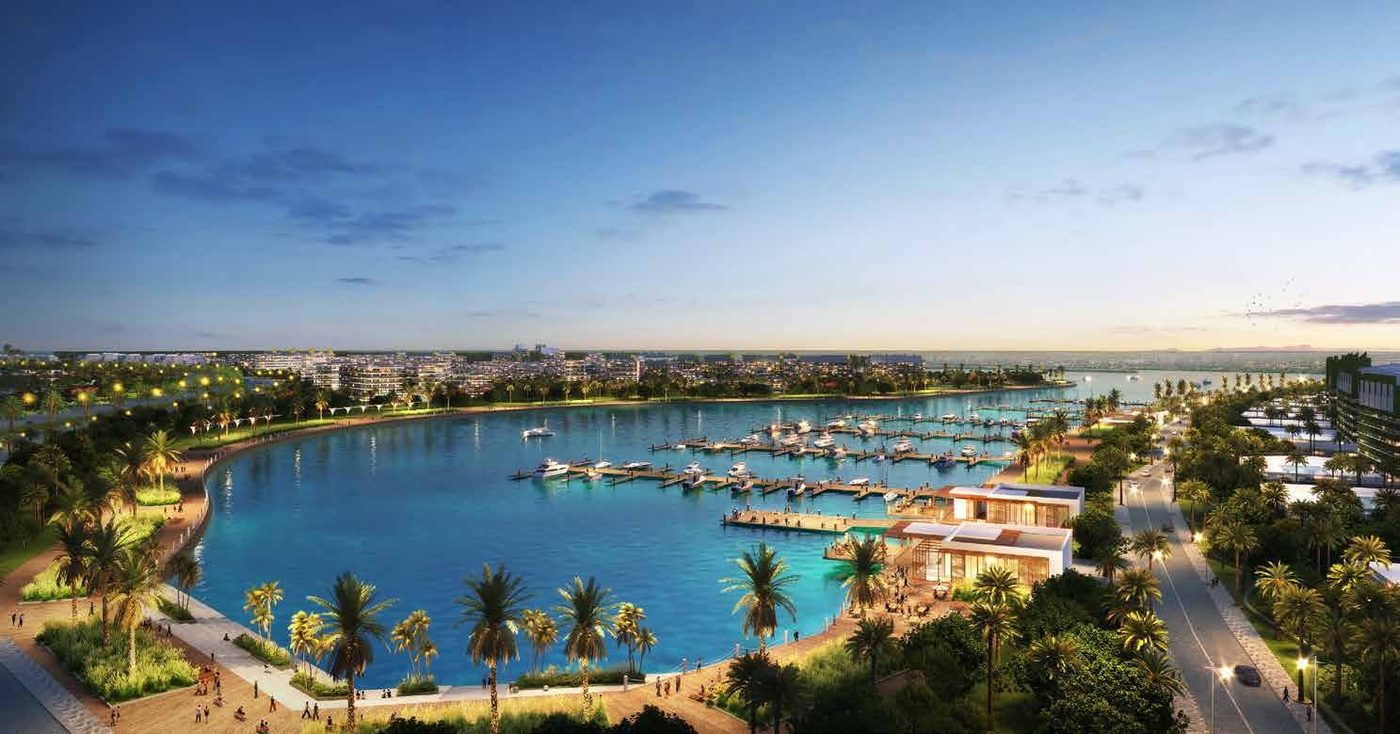
Plainly: the road, the hotels and the leisure waterfront exist. Most of the homes, the golf, and the second road link do not yet.
VIIWho is building
Dubai Islands is shared between the master developer and a growing list of private developers, with most recent launches on Island A and Island B.
- The master developer is selling its own communities: Bay Villas (launched February 2024), Bay Grove Residences (1,154 homes across three phases, 2024 to 2025) and Bay Estate (about 360 homes, released October 2026).
- Beyond, Omniyat’s second brand, unveiled its Siora masterplan on Island B in December 2025: three 21-storey towers with 678 homes, targeting completion in the third quarter of 2029.
- Ellington Properties has Ellington Sands on Island A and The Meriva Collection on Island B, five residential buildings and a hotel.
- Imtiaz Developments delivered the island’s first residential building and reports more than fifteen projects on the island, from a portfolio worth over AED 6 billion.
- Others include Azizi (Wasel), Prestige One (Seaside) and Citi Developers (ARYA Residences, where main construction began in October 2026).
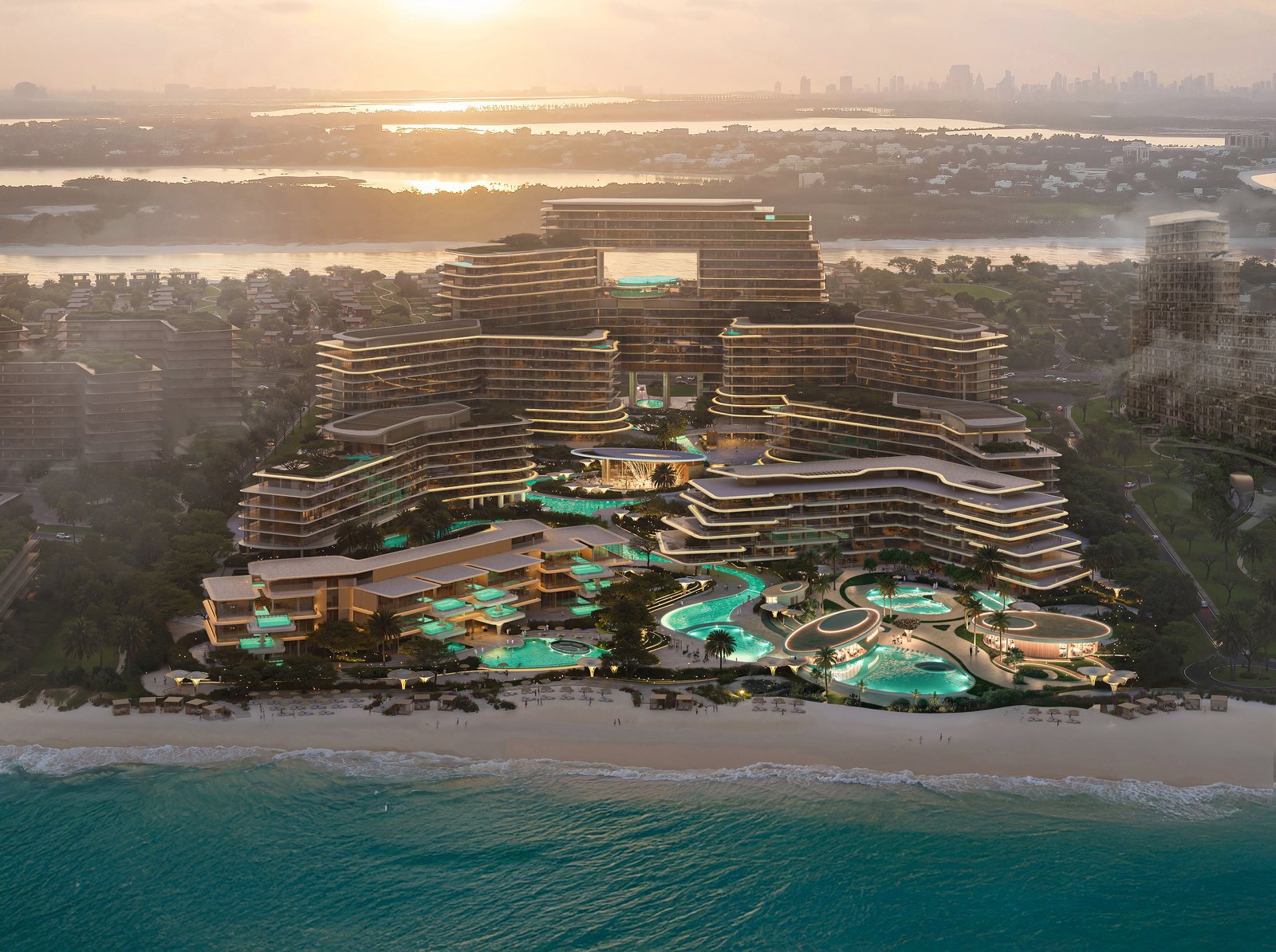
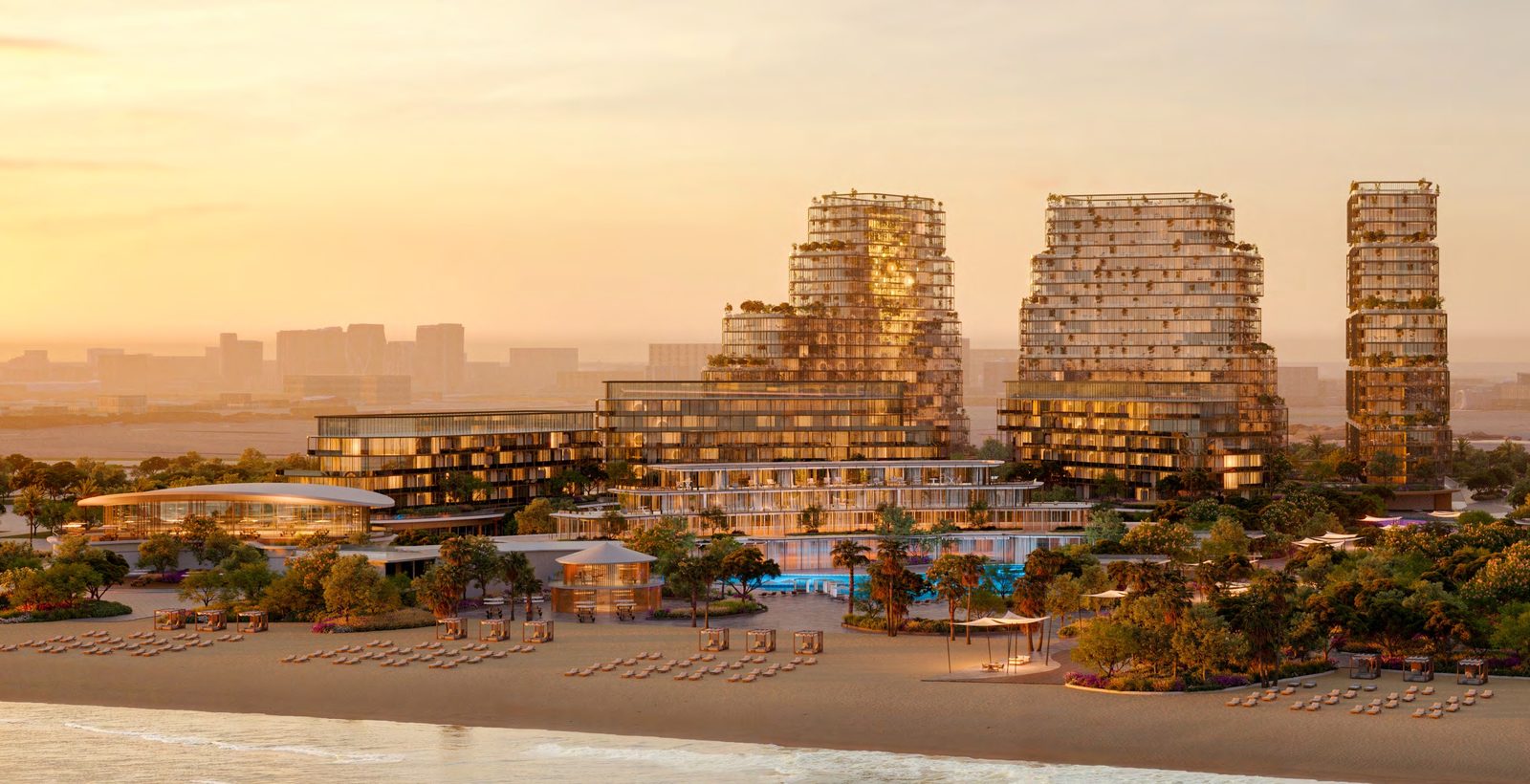
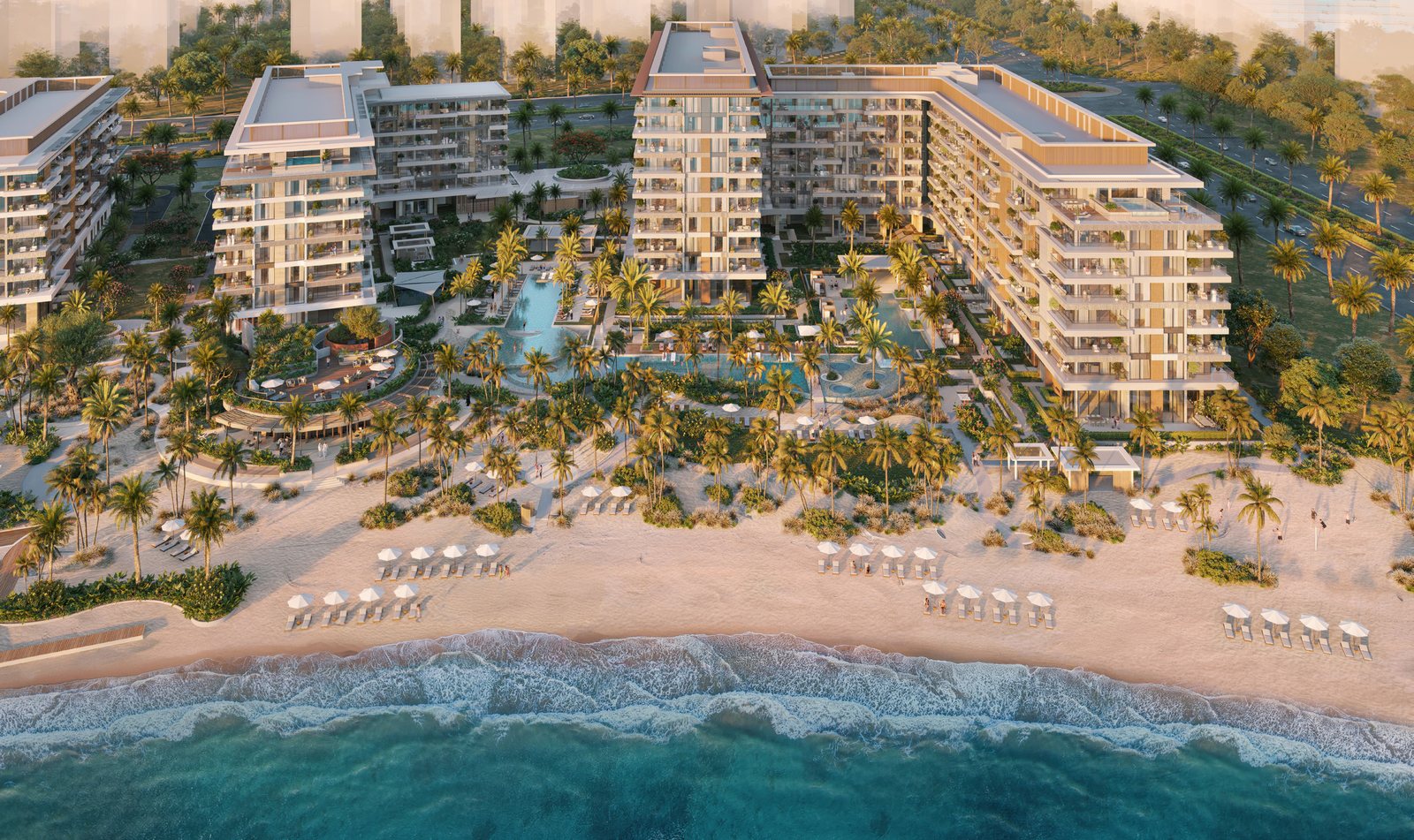
Developers on the same island are not the same risk. With one residential building handed over so far, a developer’s record elsewhere in Dubai is the best evidence of how it will deliver here.
VIIIThe supply question
Dubai’s coastline grows only through state-approved reclamation, and the supply of it is finite. Dubai Islands and Palm Jebel Ali are the two large island masterplans under way. Palm Jebel Ali, at the south-western end of the coast, is twice the size of Palm Jumeirah, with about 110 km of coastline and more than 80 hotels and resorts planned (Dubai Media Office, May 2023). Dubai Islands is the one within 10 km of the airport and the historic city.
Within the island, supply is the thing to watch. About 62,000 homes are planned, up from 49,000 in April 2026 and 38,479 in the vision plan. One building of 80 homes had been handed over by March 2026. A plan that can add 13,000 homes in six months is not a fixed supply, so the scarcity here is in the waterfront itself, the beach-facing plots and the best aspects, not in the number of homes.
What this means in practice:
- Handovers will arrive in waves. Projects launched from 2024 onward are scheduled to complete between 2027 and 2030. Buildings finishing in the same window will compete for the same buyers and tenants.
- Early residents live beside construction. A district built in phases delivers some homes years before its retail, hotels and golf are complete.
- Scheduled is not delivered. Across Dubai, Cavendish Maxwell expected only 14,000 to 23,500 of the 47,000 homes scheduled for the second half of 2026 to be handed over on time. Dubai Islands has no separate forecast.
IXWhen not to buy here
- If you need rental income within the next three years. Most homes sold here hand over between 2027 and 2030, and the rental market is still forming.
- If the case rests on a quoted yield. No yield for Dubai Islands is based on real rental contracts yet. Treat any figure you are shown as an estimate, and ask what it assumes.
- If you plan to sell before handover in a slower market. Sales across Dubai fell sharply in the third quarter. A resale before completion usually needs a set share of the price paid and the developer’s consent, and the buyer pool for an unfinished home is smaller.
- If the developer has no delivery record here. On an island with one completed residential building, a developer’s record elsewhere is the best evidence available, and it should be checked.
- If you need metro access. None is planned.
XHow we would approach it
We run every opportunity through three tests: location, infrastructure and developer. Fail one, fail all.
Location: passes. Waterfront land 10 km from the airport, on a government-backed masterplan, with beach, hotels and marina already open, in the part of the city the 2040 plan and D33 are steering visitors toward. The question is which island, which building and which aspect.
Infrastructure: partly passes. The roads, the hotels and the waterfront are built. The second bridge is under construction without an opening date, and there is no metro. Value what exists, and treat the rest as upside rather than as the case.
Developer: the deciding test. Most of what is sold on Dubai Islands is a promise to deliver between 2027 and 2030. The developer’s delivery record, the escrow structure and the payment plan carry more of the risk here than in any established part of Dubai. Within a building, aspect usually moves value more than size, so the specific unit matters.
Our judgement, not a guarantee. Dubai Islands is one of the clearest long-hold opportunities on Dubai’s waterfront: a government-backed island, close to the airport and the old city, being built to receive the visitors and residents Dubai’s plans are drawing in. It suits a buyer with a five-year horizon or longer, who is buying from a developer with a record of delivering, on a sea-facing or beach-facing plot, and who prices the purchase on what the island will look like at handover. It does not suit a buyer who needs income soon.
What we are watching: the fourth-quarter Dubai Land Department figures for the island; the first registered rental contracts as Beach Walk and the next buildings fill; an opening date for the Bur Dubai bridge; the Island B shoreline works due in late 2027; Bay Grove’s handover in late 2028; hotel openings; and whether the planned number of homes rises again.